




Liontrust’s sustainable investment team has revealed it chose not to participate in SpaceX’s IPO due to environmental and governance concerns, as well as doubts over whether the company’s valuation could be justified.
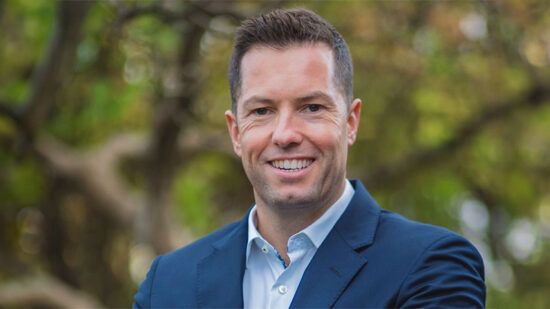
Peter Michaelis, who heads Liontrust’s sustainable investment team, said the firm’s Sustainable Future funds had avoided the IPO because SpaceX did not sufficiently align with its sustainability themes and it is a company the strategy would “actively avoid”.
He said the concerns were primarily environmental and governance-related, given SpaceX’s reliance on fossil fuels, the carbon emissions linked to its operations, and red flags around the conduct of founder Elon Musk.
“From an environmental perspective, SpaceX’s operations involve significant carbon emissions and a continued reliance on fossil fuels.
“From a governance standpoint, we see a number of red flags, particularly relating to the conduct and leadership style of its founder and CEO,” he said.
“For context, we do not currently invest in Tesla due to governance concerns, despite the company being considerably more attractive from an environmental perspective.”
Michaelis said Starlink, SpaceX’s satellite communications business, fits with Liontrust’s “connecting people” theme. However, he said the “vast majority” of the business does not fit any of the sustainable investment team’s 22 themes, which focus on companies helping the world become cleaner, healthier and safer.
He also raised concerns about the difficulty of forecasting SpaceX’s future revenues and earnings, particularly as much of its projected value appears to rest on its AI capabilities and space-based data centres.
Read more: SpaceX: Should investors believe the hype?
“The forecasting of [SpaceX’s] future revenues is incredibly difficult, let alone its earnings,” he said.
“Yes, it has a dominant space launch system that is likely to have few rivals for years to come; and yes, Starlink is a fast-growing communications system. But the bulk of the projected value is meant to hang on its AI capabilities and space-based data centres.
“Both of these are risky, highly capital-intensive ventures with more competitive threats. They could be immensely successful, but this is a long way from certain.”
Michaelis added that it was “hard to say” SpaceX’s share price undervalued its prospects.
“The price-to-revenues ratio for next year is more than 100x, which is about 30 times the prevailing multiple of the S&P 500,” he said. “It will have to be the most extraordinary trajectory of growth for this already enormous company for the valuation to make sense.”
He said Liontrust’s investment process is based on identifying companies whose share prices are materially lower than the value of their expected future earnings and cashflows.
“We believe investing is founded on forecasting the future earnings and cashflows of businesses. If we can find share prices that are materially lower than the sum of these future earnings, discounted to account for the time value of money, then that makes a sensible investment,” he said.
Michaelis also pointed to the wider risks around IPOs, saying they often take place when market participants are heavily incentivised to complete the deal.
He said Liontrust would take the same approach when assessing other expected large IPOs, including OpenAI and Anthropic.
Read more: In the age of AI, culture may become active management’s greatest differentiator