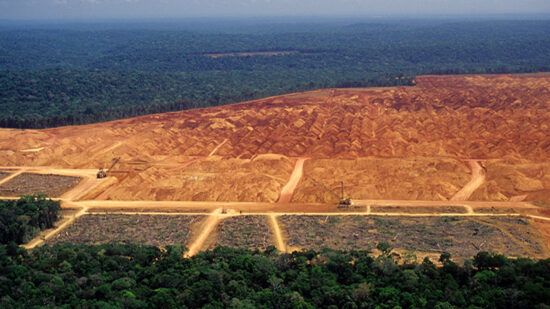




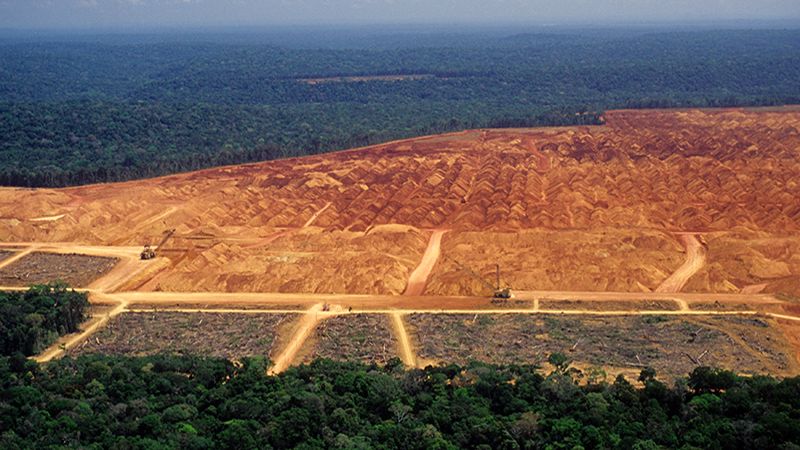
Global deforestation sits at the nexus of climate change, biodiversity loss, and social inequity. Around 420mn hectares of forest have been lost since 1990, with a further 10mn hectares disappearing annually.
While much of this land-use change has supported economic development, deforestation now contributes around 11% of global greenhouse-gas emissions.
Approximately 80% of global deforestation is driven by agricultural expansion, concentrated around a small number of high-impact commodities. Beef, soy, and palm oil account for approximately two-thirds of tropical forest loss, while cocoa production in West Africa and mining for transition metals represent growing pressures.
These dynamics directly affect the resilience of global supply chains and are increasingly material to investors.
Deep-rooted problem
Forests contain approximately 80% of terrestrial biodiversity, with tropical forests storing around one-third of atmospheric carbon. More than 75% of global deforestation is linked to agricultural expansion, driven primarily by beef, soy, and palm oil, with cocoa production in Côte d’Ivoire and Ghana exerting growing pressure. This suggests that targeted improvements in a small number of supply chains could deliver disproportionate positive impacts.
Deforestation is also a deeply social issue. Indigenous peoples (5% of the global population) steward lands that contain around 80% of the planet’s biodiversity yet are frequently excluded from decision-making.
The principle of Free, Prior and Informed Consent (FPIC), enshrined in the UN Declaration on the Rights of Indigenous Peoples, is central to effective and equitable forest protection.
Around 25% of companies assessed by the Forest 500 reference FPIC in their policies. Within the Evenlode portfolios, companies including Procter & Gamble, LVMH, Reckitt, Nestlé, and Unilever have relatively robust FPIC commitments, though on-the-ground implementation requires continued scrutiny and engagement.
Deforestation presents physical, transition, and reputational risks that are increasingly material to portfolio companies. Physical risks arise as forest-loss undermines the proper functioning of ecosystems. This in turn contributes to yield and pollinator declines.
For example, recent volatility in the cocoa market has led to prominent players tempering market expectations. The volatility in the futures market for cocoa, which saw prices increase more than 300% from 2022-2024, can be directly linked to inconsistent rainfall in Ghana and Côte d’Ivoire.
Transition risks are intensifying as regulation tightens. The European Union Deforestation Regulation (EUDR) will prohibit the import of deforestation-linked commodities and products produced on land deforested after 2020. The directive will reshape global supply chains and increase compliance costs for exporters and importers alike.
Brand risks
Companies must demonstrate that products are deforestation-free, to plantation level, and legally produced, or face sanctions including fines of <4% of EU turnover, confiscation of goods, and public blacklisting.
The EUDR aims to ensure that consumption in Europe is not contributing to deforestation or forest degradation in the tropics and worldwide, with the ultimate goal of curbing biodiversity loss and reducing CO2e emissions.
Shortly after the directive was delayed in 2024, we spoke with Nestlé, who stood alongside Tony’s Chocolonely and Ferrero in calling for the original implementation date to be kept. According to senior leadership, delaying the regulation risked sending the wrong market signal and implied a lack of seriousness around deforestation goals.
Reputational risks are particularly acute for premium and luxury brands. Only a small fraction of companies with net-zero pledges are aligned with deforestation targets, exposing firms to accusations of inconsistency.
According to LVMH’s 2024 CDP submission, the group identifies deforestation as a material reputational risk, particularly within its cosmetics division (around 10% of sales) and leather goods division (over one-third of sales) due to exposure to palm oil and cattle.
Reputation risk is by nature, difficult to quantify and contain. It is hard to predict when and how a piece of news flow will get picked up and to what extent a controversy will or won’t resonate with consumers.
Sitting at the intersection of climate- and nature-based risks, deforestation represents a material and tangible threat to a number of our portfolio companies over the long-term.
Our analysis highlights that deforestation is not merely an environmental concern, but is also a strategic and financial one. Its impacts are felt through physical disruptions to upstream supply, transition costs arising from evolving regulation, and growing reputational scrutiny.
Read more: Urgency to tackle deforestation